
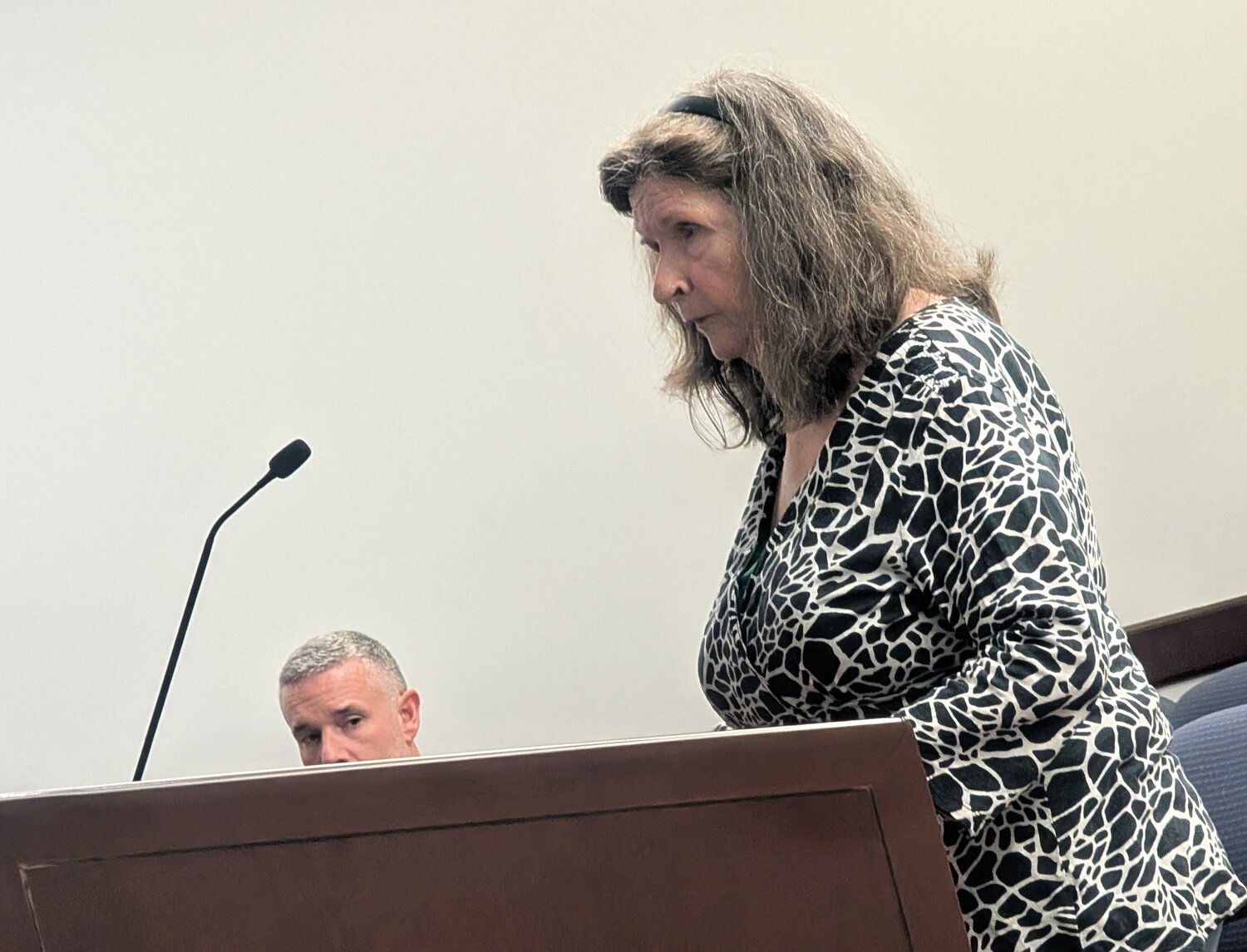
ROCKINGHAM — After weeks of experiencing water with an unpleasant odor and taste, one resident addressed her concerns with the City Council.
At the end of the June 9 meeting, Catherine Jones spoke up during the public comment section about her recent water woes.
Jones told the council members that her water hasn’t gotten any better.
On May 6, the city released a statement saying that the dirt taste was due to the recent drought.
“I’ve lived here all my life and we’ve gone through severe droughts before,” Jones said. “But this water situation — we’re having to bathe in it, and when you bathe in it, it’s like bathing in dirt. You smell like dirt. Our home smells like dirt. And it’s just not right.”
Jones said she has been drinking and cooking with distilled water, adding that she didn’t think chemicals were being used for treatment like they should — though she didn’t lay the blame on the Water Department workers.
Mayor John Hutchinson assured Jones that the water does meet state standards for safe drinking. He also said that no one is withholding chemicals.
“In fact, it’s being treated more heavily than before,” Hutchinson said. “So the chemicals are being used as needed.”
The mayor then referenced drought.gov, noting that the county was recently upgraded from extreme drought to severe drought.
 A map shows drought conditions across North Carolina. Red indicates extreme drought, orange indicates severe drought, and tan is moderate drought.
Courtesy drought.gov
A map shows drought conditions across North Carolina. Red indicates extreme drought, orange indicates severe drought, and tan is moderate drought.
Courtesy drought.gov
According to that website, this past April was the fourth-driest in the past 132 years for Richmond County, with rainfall being 2.69 inches below normal. The first four months of the year was the second-driest on record, with rainfall accumulation down by 8.32 inches.
Several portions of North Carolina are still under extreme drought conditions, including the southeast coast, far-western counties, and a large swath stretching along the Interstate-40 corridor to the Virginia border from Halifax County to Watauga County, dipping down into parts of Rowan, Stanly and Anson counties.
“So it’s not an ordinary drought we’re experiencing, it’s a once in multiple generations kind of drought,” Hutchinson said. “It’s not the kind of thing that we have seen, really, before.”
City Manager Monty Crump told Jones that the state came down a week and a half ago and reiterated that the water meets state standards.
Crump said the problem lies in the natural sources of the municipal water.
 Rockingham City Manager Monty Crump explains what the city has done to mitigate the water situation.
William R. Toler - Richmond Observer
Rockingham City Manager Monty Crump explains what the city has done to mitigate the water situation.
William R. Toler - Richmond Observer
“It just happened that that water is turned upside down —which lakes do that,” Crump said, adding that the factors of unusually hot temperatures, the drought and low-flow conditions affect “raw water quality.”
“I drink the same water that you do, I bathe in it, I fix tea with it — my house does not smell like dirt, I don’t smell like dirt when I take a shower,” Crump said, adding that he wasn’t questioning Jones, but that was the first he’d heard of the dirty feeling from bathing. “It’s frustrating, it’s stressful on us all.”
Crump said the city is now using granulated carbon to help remove the organic taste and smell from the water and he has noticed a difference at his home and a local restuarant.
“We’ve had issues like this before … but not to this length of time,” said Crump. “When we realized that, we took immediate action.
“It’s still going to take a while to get there … the raw water source has got to correct back to where it was.”


