(BPT) - Key takeaways:
When Capt. Carter Phung was handed the keys to a 50-vehicle convoy during Hurricane Florence in 2018, he had been an officer in the South Carolina Army National Guard for only a few weeks. Despite being new to this level of responsibility, he understood the stakes: The storm bearing down on the South Carolina coast was headed straight for his hometown of Conway — where his own family still lived.
"You don't get to choose when disaster hits, and you don't get to wait until you feel ready," Phung said. Over the next month, he helped coordinate the movement of equipment that would become the "Great Wall of Conway," a barrier made up of sandbags and plastic sheeting built to hold back rising floodwaters and protect critical local infrastructure and vital traffic access across the county.
Throughout this experience, he saw how communities can come together during times of crisis and uplift one another in need. Neighbors he'd grown up with brought coffee and home-cooked meals to Soldiers pulling 24-hour shifts, and a mother introduced her two young kids to the unit, telling them, "These are our Army people. They're the reason we're still here."
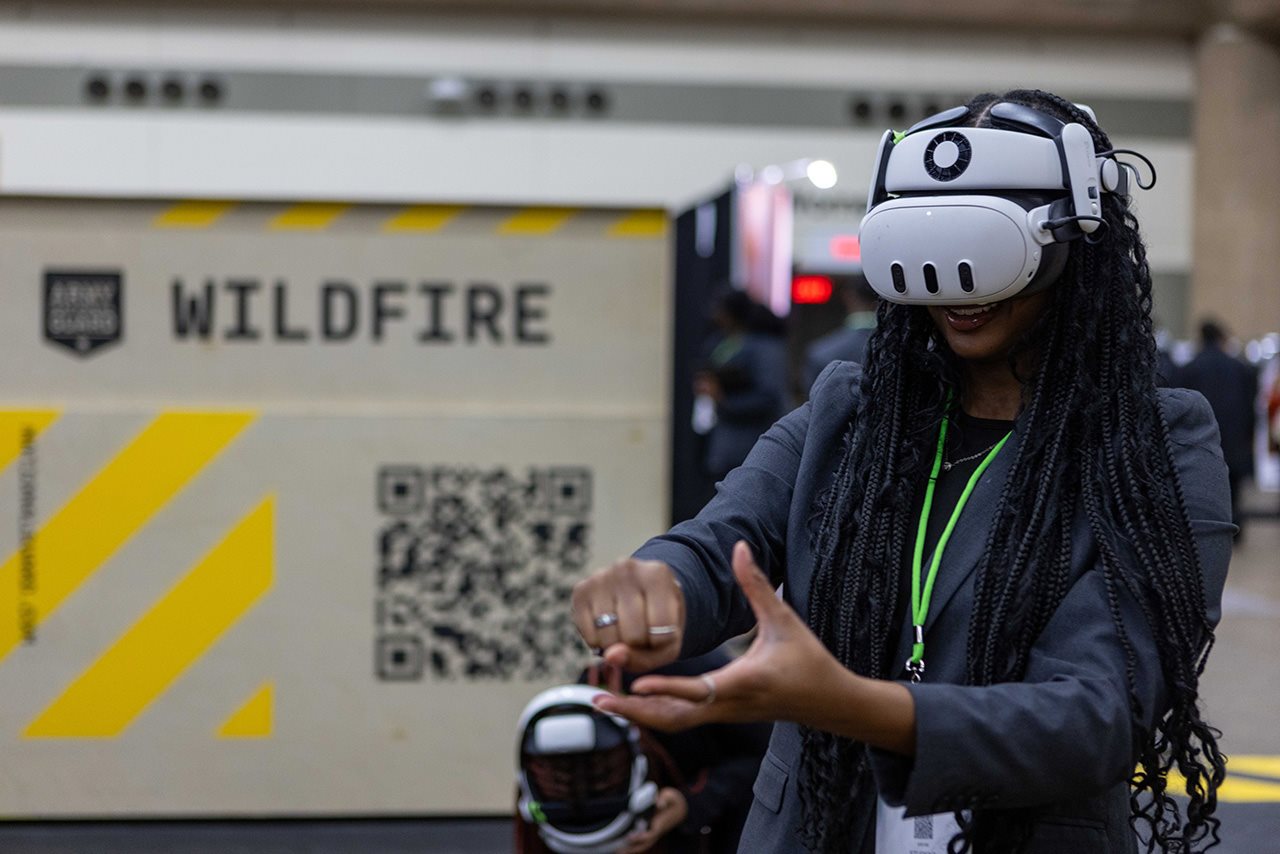
Experience the Guard's most common missions
Phung's story is one of thousands playing out across the Army National Guard every year. Soldiers serve part-time — often in the towns they live in — and are called upon when disaster strikes to provide resources and support during a community's most vulnerable time. Over the past several months, Army National Guard Soldiers have waded into flooded counties in Texas, flown rescue helicopters over rising water in West Virginia, and helped communities in Indiana and Wisconsin dig out after tornadoes. In Washington state, more than 200 Soldiers spent weeks fighting wildfires that eventually burned through over 200,000 acres.
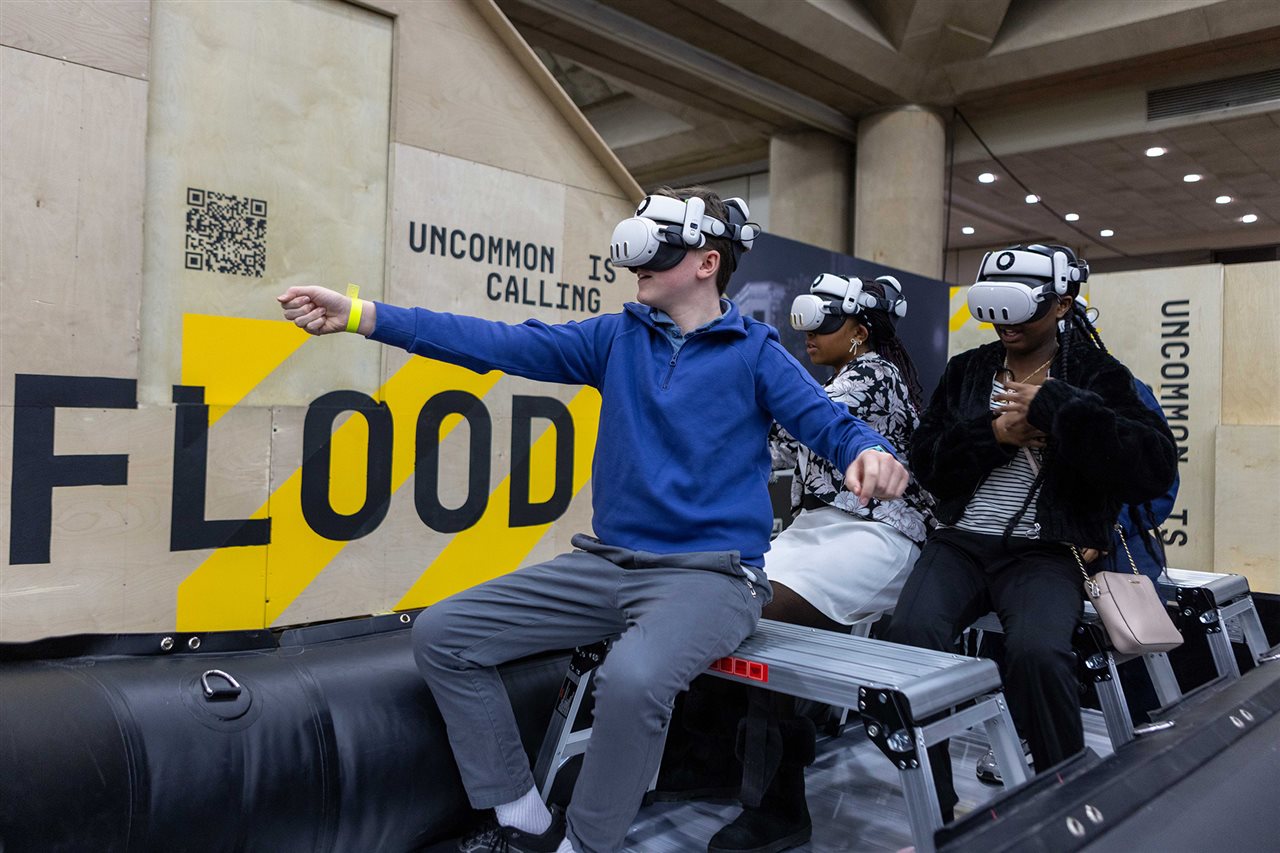
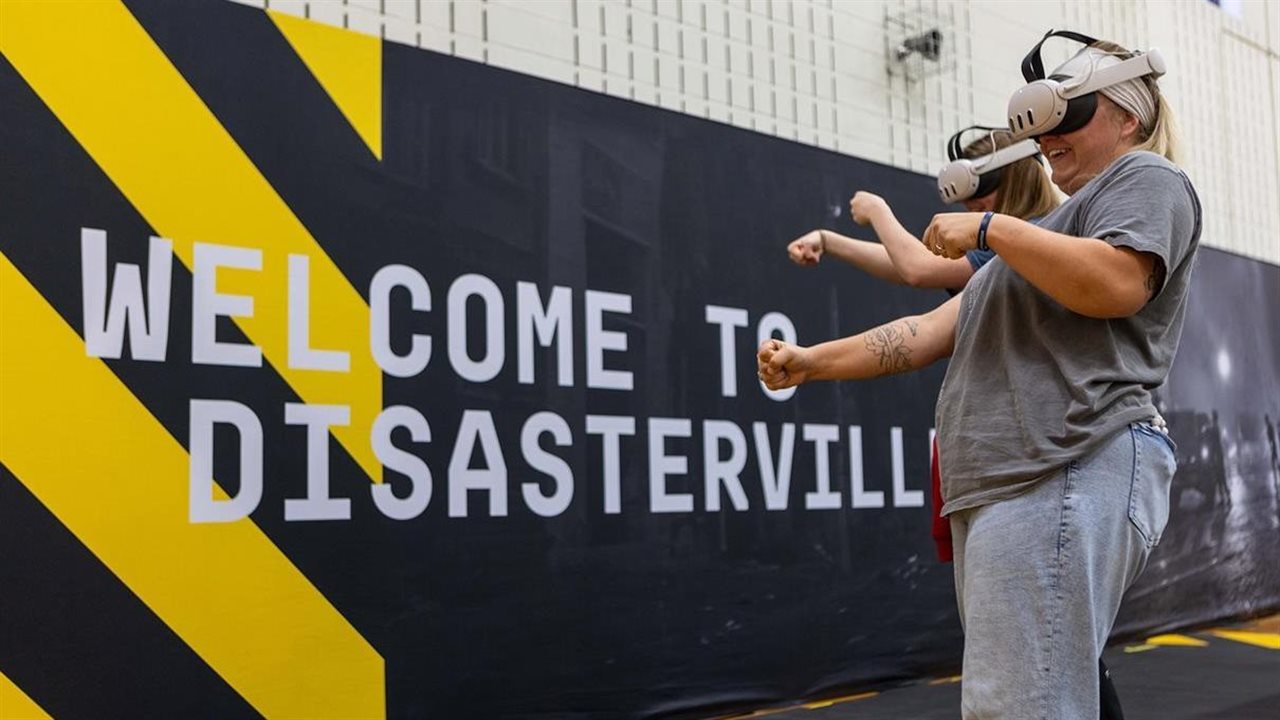
Disasterville transforms high school gyms into virtual disaster zones where students work together to tackle each mission the same way as the Guard.
"Natural disasters are not slowing down, and Army National Guard Soldiers are playing a critical role in response efforts across the country," said Lt. Col. Sabrina Zowada, Chief of the National Guard Bureau's Marketing and Advertising Branch. "Disasterville is a one-of-a-kind perspective for students to see how and when the Guard is showing up in their communities and experience the real skills and impact of these important missions."
Lessons of disaster response for a new generation
Reflecting on his disaster response experience, Phung credits it with teaching him resilience, adaptability and confident leadership under pressure — qualities he hopes to convey to students through the program. "What I want kids walking through Disasterville to understand is that the person showing up to help isn't some far-off Soldier — it's their neighbor, their teacher, their coach," he said. "That's who the Guard actually is."